Most restaurant owners don’t have a food problem.
They have a menu system problem.
After working in kitchens, production, and food systems for over 45 years, I’ve seen the same pattern over and over—especially in smaller, independent restaurants.
The issue isn’t effort.
It’s not passion.
It’s structure.
The Real Problem: Too Many Ideas, No System
Most menus grow over time without direction.
A new item gets added.
Then another.
Then something gets copied from somewhere else.
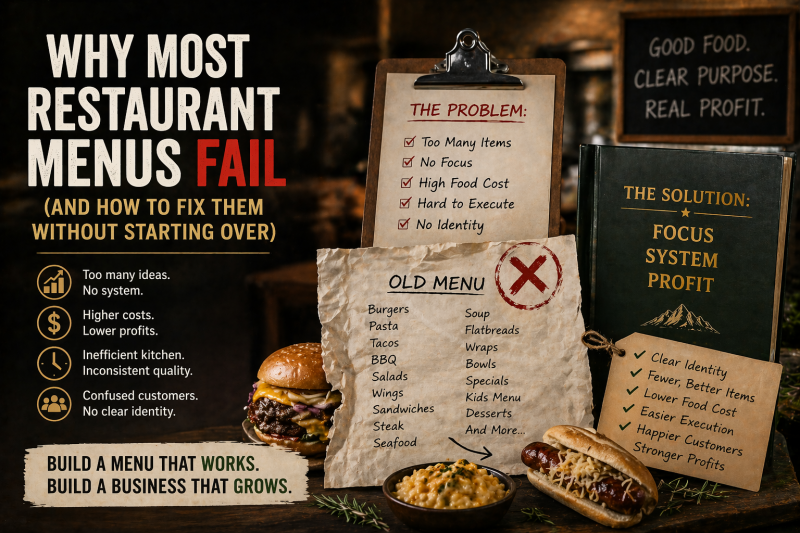
Before long, the menu looks like this:
- Burgers
- Pasta
- Tacos
- BBQ
- Random specials
Nothing connects.
That creates problems immediately:
- Too many ingredients
- Higher food costs
- Slower prep
- Inconsistent quality
And most importantly:
No clear identity. I see it all the time, as a consultant and food critic.
Why This Hurts Profit
When your menu isn’t structured, your kitchen becomes inefficient.
You’re:
- Stocking too many ingredients
- Throwing away unused product
- Spending more labor on prep
- Relying heavily on expensive proteins
At the same time, customers don’t remember you.
Because there’s nothing distinct to remember. What is your signature and brand identity?
The Fix: Build a System, Not Just a Menu
You don’t need to throw everything out.
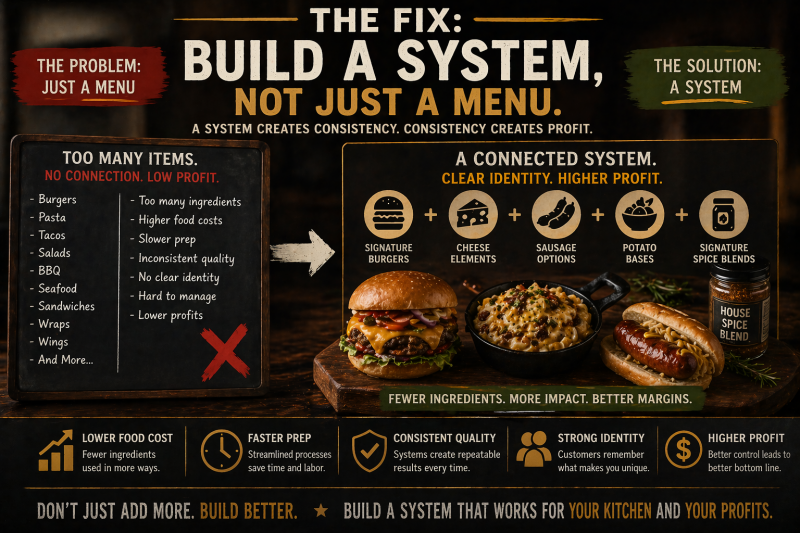
You need to build a system behind what you already have.
That means:
- Fewer core ingredients
- More cross-utilization
- Clear identity
For example:
Instead of 7 different burgers with random toppings,
you build 3 strong burgers using shared components.
Then you add:
- A cheese-based dish (high margin)
- A potato base (low cost, flexible)
- A signature element (spice blend or sausage)
Now everything connects.
Why Cheese, Sausage, and Simple Systems Work
In my work, I focus on European-style systems because they naturally solve these problems.
They’re built around:
- Bread
- Cheese
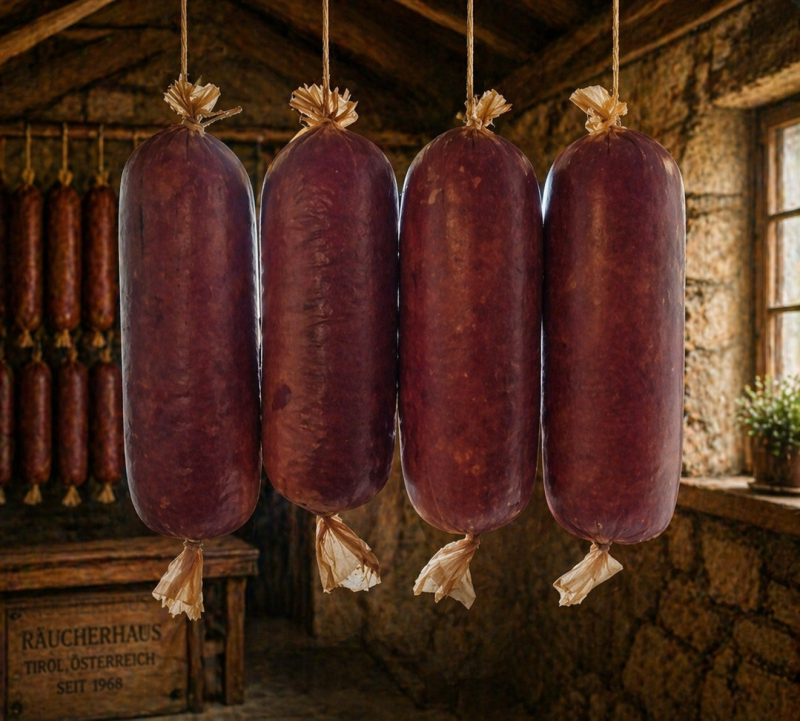
- Sausage
- Potatoes
These ingredients:
- Are cost-effective
- Store well
- Work across multiple dishes
That gives you:
- Lower food cost
- Faster prep
- Strong identity
And most importantly:
Consistency

Add Revenue Without Adding Complexity
One of the easiest ways to increase revenue isn’t adding more menu items.
It’s extending what you already have.
For example:
- A house spice blend used in your dishes
- Sold as a retail product
Now your customer:
- Eats your food
- Takes your flavor home
- Comes back for more
That’s a system—not just a menu.
What Restaurant Owners Should Focus On
If you’re looking at your menu right now, ask:
- Do my items connect to each other?
- Am I using too many ingredients?
- What actually makes my menu different?
- Where am I losing money?
If those answers aren’t clear, that’s where the opportunity is.
Final Thought
You don’t need a bigger menu.
You need a better system.
When your menu is built the right way:
- Your kitchen runs smoother
- Your costs go down
- Your food becomes more consistent
- Your brand becomes stronger
And your customers notice.
Want Help Fixing Your Menu?
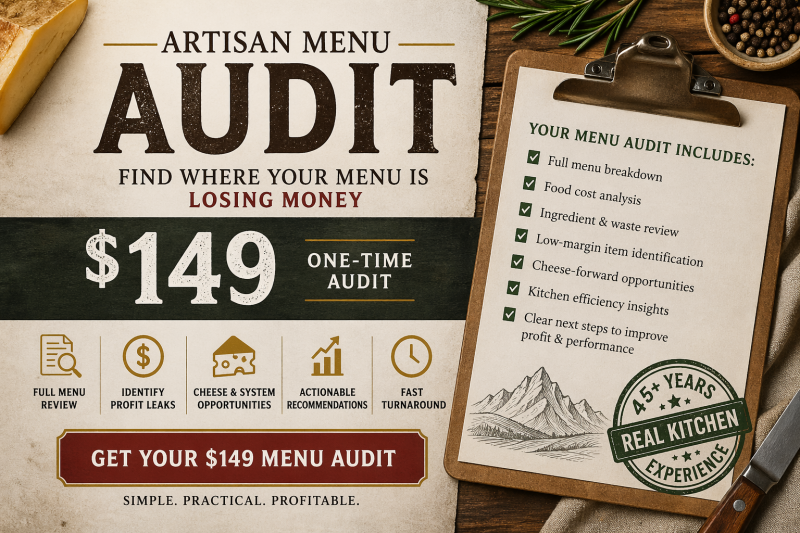
I offer a simple $149 Artisan Menu Audit where I break down:
- Where your menu is losing money
- What to simplify
- What to build around
Start with clarity. Then build the system.